
Drop the Labels: How Addiction Divides Families and How You Can Reclaim Your Ground
When families ring me at The Intervention Service, they are usually exhausted, isolated, and out of ideas. By the time they make that call, they have tried everything they know how to do.
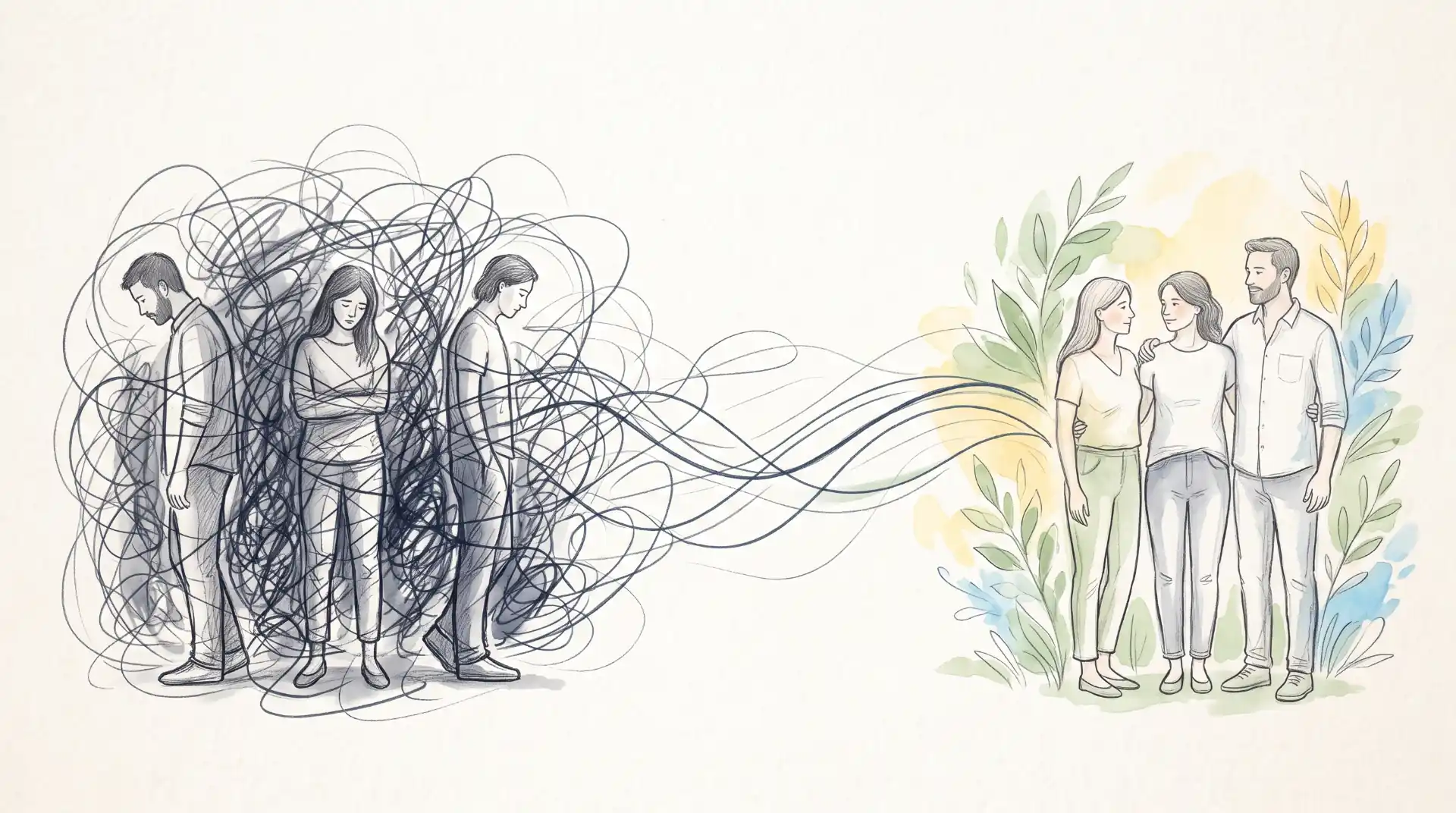
They also arrive carrying a heavy vocabulary of blame. Words like addict, alcoholic, enabler, and blamer dominate the conversation. Addiction has moved into the home and done what it does best: divide, conquer, and systematically erode healthy relationships.
If you are living in this storm, you probably recognise the painful arguments that follow. “If you loved me, you wouldn’t do this.” “Why can’t you just hold down your job?” “She used to be such a lovely girl.” Behind closed doors, you might be hiding the fallout to protect their reputation, terrified of what happens if the outside world sees the truth.
Look at the Behaviour, Not the Label
Through the Addiction Intervention Model (AIM), our first job is to help you unhook from these stigmatising labels. Calling someone an “addict” or calling yourself an “enabler” keeps everyone trapped in shame and defensiveness. Instead, we look at the actual behaviours—and what those behaviours are trying to achieve.
For the person struggling with drink or drugs, using is rarely about fun anymore. It has become a medicine. Their biggest fear is sobriety, because being clean exposes them to overwhelming internal discomfort: shame, guilt, anxiety, and the wreckage of their relationships. Using chemicals makes that pain go away in the short term.
Recognise How Your Own Fear Drives Enabling
Here is the uncomfortable truth we have to face: your enabling works in the exact same way.
When you are terrified, anxious, and catastrophising about what might happen next, rescuing them makes complete sense. Covering for them at work, paying off a debt, or smoothing over a crisis brings immediate relief. Enabling fixes your feelings. In the short term, it always works.
Both the person using and the family trying to fix them are caught in the same trap—running away from painful emotions. But if enabling actually worked in the long term, you wouldn’t be reading this. Instead, everyone ends up broken, busted, and disgusted, pointing fingers at one another while the illness isolates you all.
Stand Shoulder to Shoulder as Interveners
Real change requires shifting from reactive family fixers to strategic, values-led Interveners.
An effective intervention does not start with confronting your loved one; it starts with the people around them learning to stand shoulder to shoulder. When addiction has separated you, unity is your strongest asset.
To break the cycle, you have to step back and re-establish healthy guardrails:
- Set clear, non-negotiable boundaries: Decide what you will and will not accept in your home, and stick to it calmly without lecturing.
- Prioritise your own well-being: Reclaim your sleep, your physical health, and your peace of mind. You cannot help someone else drown while you are sinking.
- Lead with your values, not your fear: Ask yourself how you want to show up as a parent, partner, or friend, even when it feels deeply uncomfortable to let them face the natural consequences of their actions.
Create the Opportunity for Help
When you stop absorbing the fallout of someone else’s addiction, two things happen. First, your own health and sanity begin to recover. Second, you stop shielding your loved one from the reality of their illness.
You cannot force someone to accept help, and you cannot fix their discomfort for them. What you can do is change the environment around them. By uniting as a family, holding firm to your values, and tolerating your own short-term anxiety, you create the exact conditions where genuine recovery becomes possible.
Stop fighting the labels, drop the tug-of-war, and start standing together.
Leave a Reply